

5 Things I'll Teach My Kids Instead of Algebra
There's just way more to life.

I hate algebra, and I haven’t once used it in real life. So maybe I’m not the best person to write this article - or maybe I’m the perfect person to write it? I’m not sure.
But as a homeschooling mom who never used algebra, I can think of a lot better ways to spend our time. Did you know only 5% of adults actually use algebra? That’s a pretty low number for requiring 100% of children to learn it. That number shouldn’t have surprised me to see, but it actually did. Sometimes I just can’t believe how ridiculous traditional school is, but it continues to surprise me.
So yeah, forget algebra. If they’re going to need it, it will naturally come up in real life. And our particular philosophy on homeschooling is that we’re doing “real life” right now. Our children aren’t on some kind of hold until they hit their 18th birthday. They’re engaging in the real world, being encouraged to pursue their interests and solve problems. And if algebra comes up along this journey then we’ll learn it in an applied way.
But I don’t believe we need to be teaching high-level math, science, etc. “just in case” and prioritizing that over the obvious skills that they literally need right now. That we all need. And that so many children have transitioning into adulthood without.
Here are 5 things I can think of (though there are way more) that I will absolutely be teaching instead of algebra.
1. Basic Survival Skills
Learning survival skills is the most fun way to get boys to connect with nature. I can’t speak to girls everywhere, but I can confirm that girls who have come to our nature school have not been that enamored with it. They’re more interested in nature journaling or drawing, which we have a hard time getting the boys to do. They’re just different. But yeah, that’s a different article.
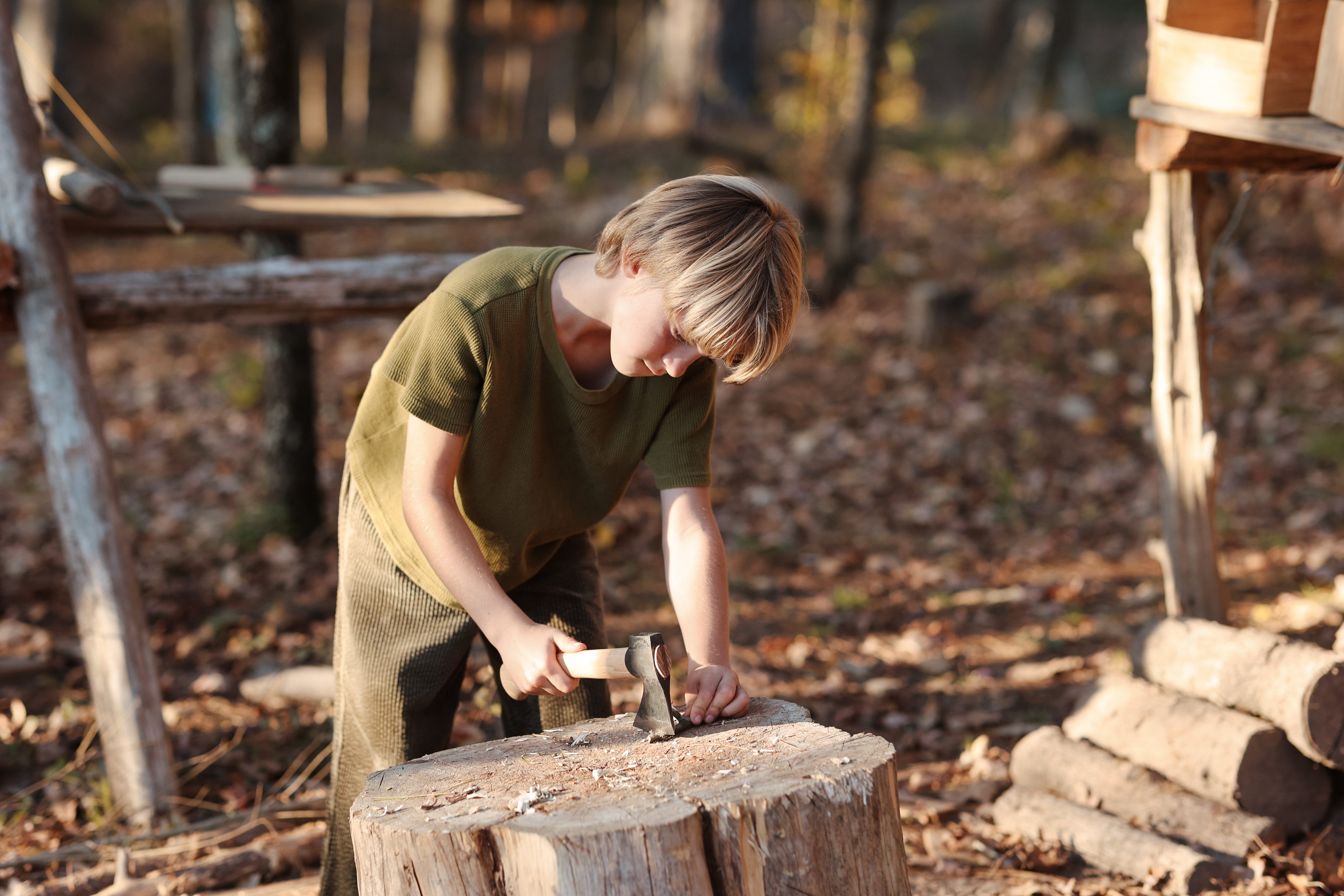
The boys love doing the hands-on, active, building stuff. Using knives and real tools to conceive, carve, and create cool things. There’s something primal about using a knife to bend nature to your will, and you can just see their eyes light up when they’re doing it.
This is one of the first things we are teaching, not just because it’s cool, but because it does trigger this primal area in their brains and develops hand-eye coordination, self-awareness, patience, focus, and so much more. Being able to make something with your bare hands is a confidence builder that creates a strong foundation for literally anything they’ll ever do in life.
And then there’s fire. One of the very elements of creation itself. Something to be respected, learned, and handled well. It has real, observable effects on the body — on mood, on focus, on regulation. Parents spend so much money searching for tools to calm their children’s nervous systems, and meanwhile, fire is free. It’s mesmerizing. It slows you down. It demands presence. So we make fires as often as we can: it’s a core subject in our homeschool.
2. How to Eat and Move
Movement and eating real food: a human needs to do both. In schools they have a really weak PE session where they may learn about some exercises, maybe even do some. But they fail to turn movement into a lifestyle. That’s what we’re doing here at home.
Movement isn’t another lesson or subject, it’s part of daily life. Multiple times a day. We incorporate “wrestling with Dad” time, obstacle course time, walks. The boys see us exercing daily: stretching, lifting weights. We’ve normalized being active. We go on family hikes multiple times a week. Throughout the day, we learn to gauge energy levels: we notice when their bodies need to run, jump, or climb, and we are actively teaching them how to notice that need, too. Around here, we do something about the messages our bodies are telling us. It’s a top priority, because everything else in life stems from that.
We teach them what real food is and what real food isn’t. No fake body positivity talk here. The whole “there are no bad foods” argument is honestly the most ridiculous thing I’ve ever heard. No doubt created by “nutritionists” who don’t actually want to solve obesity or eating disorders, but to keep them going because they wouldn’t have a job anymore otherwise.
None of that. There are real foods, and not real foods.
Am I saying we follow this to perfection? Absolutely not. We eat out and grab Chik-Fil-A when we travel. Our protein powders, though high quality, are obviously processed foods. But our daily eats are whole foods. And we’re teaching them to listen to their bodies. To notice reactions - to sugar, for example.
Because it’s not actually about perfectionism, it’s about being in tune with what’s impacting our bodies. Is this making me better? Is this making me stronger?
Growing up with a garden (and soon a greenhouse!) they will be able to clearly see where food comes from and what it looks like.
Food and nutrition is foundational to everything. Particularly when homeschooling: a child who isn’t fed well has a hard time learning. They can’t process input clearly enough to think for themselves, make good decisions. And honestly, it keeps the whole family stuck in a loop of correcting behaviors and wonky energy levels, rather than moving forward with creative and intentional projects and pursuits.
Which is what we want! Less conflict, less unnecessary struggle — and more fun, creativity, flow, and adventure. Food and movement pave the way for that.
3. How to Listen to Themselves
I kind of touched on this one already, because it honestly feeds into everything. But it’s tricky. I’ll admit I don’t have the magic answer for this one - I’m just feeling it out day-by-day. But one of the top things I want my children to learn is how to listen to themselves.
Listening to their bodies is one thing.
Listening to their bodies when they need movement, or listening to how their bodies are responding to certain foods.
But how do we teach them to listen to their own minds. Their intuition, their souls, their logic.
Heck, how do I teach myself how to do that consistently?
Over the past year, I’ve watched “gentle parenting” get shredded by Christian Conservatives as a surefire way to create weak and anxious children. The argument is that they need authority and strong boundaries. But what I haven’t heard anyone explain is: when does that stop, exactly? When they turn 18 and leave the house and haven’t practiced thinking for themselves aka being their own authority?
